
Strong Cheeses and Mild Cheeses – Which is Best for You?
There’s a lot to like about cheese. Some people love [...]
There’s a lot to like about cheese. Some people love certain textures; a soft cheese melts in the mouth while a hard cheese has a bit more bite to it. Others like what they can pair it with, and consider the accompaniments just as important as the main event.
Often it’s just about the flavour; strong blue cheeses versus the classic white cheese, or unique flavours like chocolate and chilli cheese.
Unless you’re a cheese expert like us, all these different names and descriptions don’t mean much, and therefore filling your cheese hamper with the perfect selection is tricky. So if you just want a strong cheese or mild cheese, we’re here to make things simpler.
What is a Strong Cheese?
Strong cheeses are packed with flavour because of active bacteria that is safe to eat or long aging times that enhance the tang.
Our strong cheeses include:
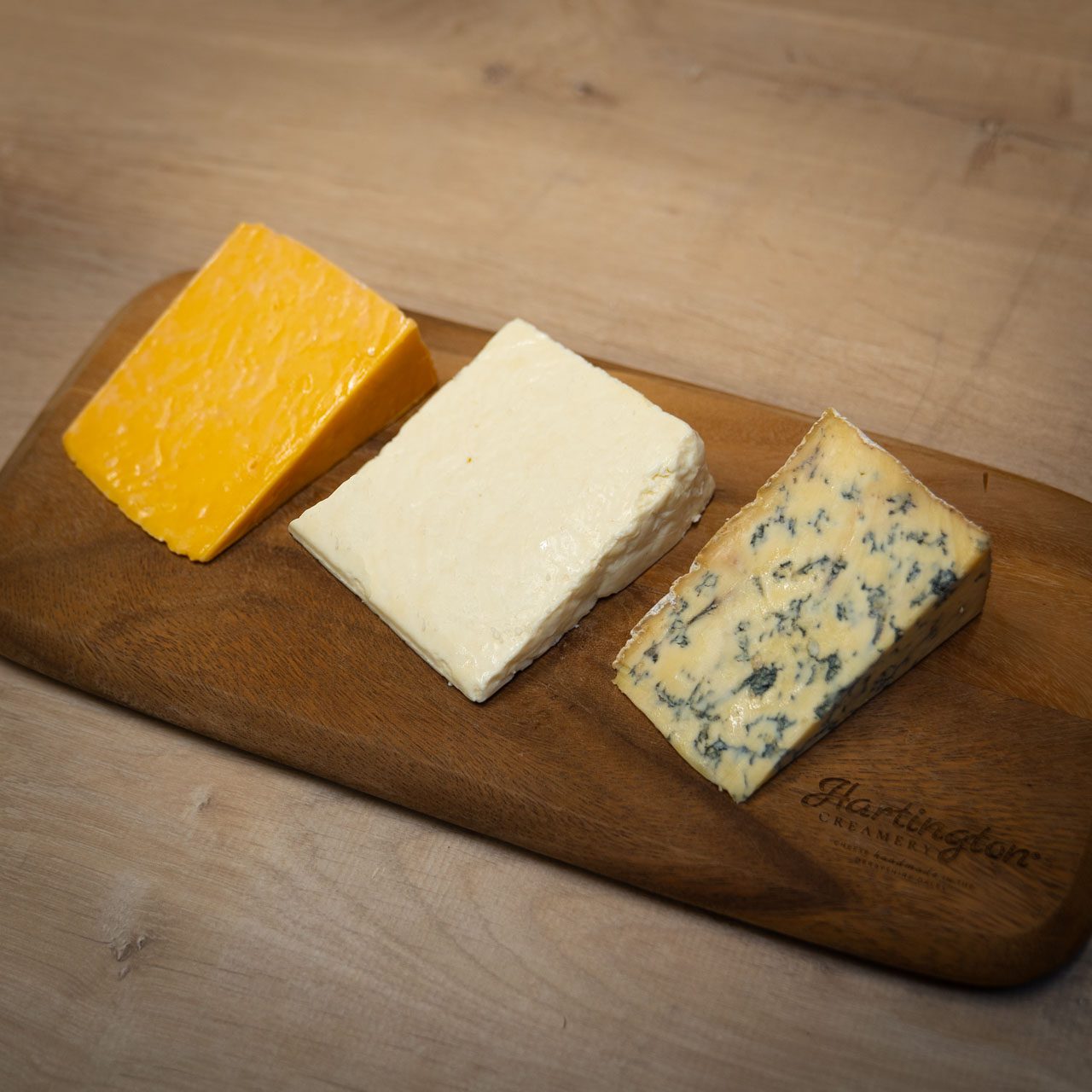
- Blue Cheese – Crafted with fresh cow’s milk and strategic penicillium moulds that create a flavour that you’ll be thinking about for days after it’s all gone. Our favourites are King’s Blue, Dovedale Blue, and Devonshire Gold.
- Aged Cheese – The longer you age cheese, the stronger the flavour. Cheddar, Stilton, and other classics are often aged to make them taste better than anything you’ll find on supermarket shelves.
- Unique Flavour Cheese – We blend our white cheese with special natural flavours, creating masterpieces like our Hartington Hottie, Chocolate & Chilli, and Cranberry & Orange Peel to name just a few!
All of our cheeses are crafted in such a way as to unlock as much flavour as possible. We only use traditional methods for mixing, aging, and packaging. No artificial flavours or preservatives, just the good stuff.
What is a Mild Cheese?
Mild cheeses are still flavourful, but are a lot gentler on the tastebuds.
Our mild cheeses include:
- White Cheese – This is a lot milder than blue cheese, as there are no mould veins (spots). Our White Stilton has a slight tang, but is mild enough to be perfect for cooking or to enjoy on its own.
- Young Cheese – A cheese that is ‘young’ hasn’t been aged for very long, and therefore has a milder flavour. Our Peakland White is only aged for two weeks, and is one of the mildest in our range.
- Soft Cheese – A lot of softer cheeses are milder in flavour, which is why they are often used as spreads or in combination with other ingredients.
Our cheese will always have plenty of flavour, but if you prefer the milder side, we’re happy to oblige.
Strong Cheese Vs Mild Cheese
Naturally, there isn’t a ‘best’ flavour of cheese. We all have our preferences, but we always encourage people to try something new. That’s why we offer Lucky Dips, Cheese Subscription Boxes, and you can customise cheese hampers to try unique cheeses whenever you feel like it.
Both strong cheese and mild cheese have their pros and cons. Strong cheese is naturally more flavourful; a taste sensation with every bite. If you really like artisan cheese, you’ll naturally have a good palette so strong flavours might be just what you’re looking for.
Milder cheese is more versatile. It can be enjoyed on its own, or used for cooking. You can also pair it with cheese accompaniments if you want some sweeter flavours in the mix. Speaking of which…
What to Pair with Mild Cheese
Mild cheese is much easier to find accompaniments for. You can enjoy it with crackers or biscuits, like the ones made by our friends at Popti, or use chutneys, pates, and other spreads to liven it up.
This may sound like our mild cheeses are dull, but that’s far from the truth. They’re still packed with flavour, just not the sharp taste that blue cheese provides, or the tang of a well-aged cheese.
If you’re creating a cheese board, milder cheese gives you more flexibility. If it’s a favourite of yours, you can be more experimental with what goes with it.
What to Pair with Strong Cheese
Some of the strongest cheeses, especially blue cheese, can overpower some accompaniments. This isn’t always a problem – your cheese should be the centerpiece after all – but you need to be more tactical with what goes alongside it. A strong chutney could end up just battling with the cheese, potentially reducing the enjoyment of both.
If you have particularly strong cheese, you can focus more on the texture of your accompaniments than the flavours. Our crackers and biscuits aren’t too flavourful, as they should just be a savoury platform for your cheese, with additional crunch that makes it more satisfying to eat.
Chutneys can still work with strong cheese, as the smoothness is a nice texture to enjoy with a firmer cheese, and the sweetness always pairs well.
If you are creating a cheese board, you should balance your selection of mild and strong cheese. Too many strong flavours and none will stand out. You should also ensure that you include a liquid accompaniment like wine, port, or fruit juice that cleanses the palette between cheeses.
Artisan Cheese for Everyone
We’re proud to offer a wide range of cheeses and accompaniments, with new mainstays and limited edition flavours being added on a regular basis.
Our mission is to help more people to discover their favourite cheeses, and we’re sure that the perfect choice is already available on our website.
If you want to learn more about our cheese, please check out our blog or get in touch if you have any questions. We look forward to hearing from you!